Humpback Whales
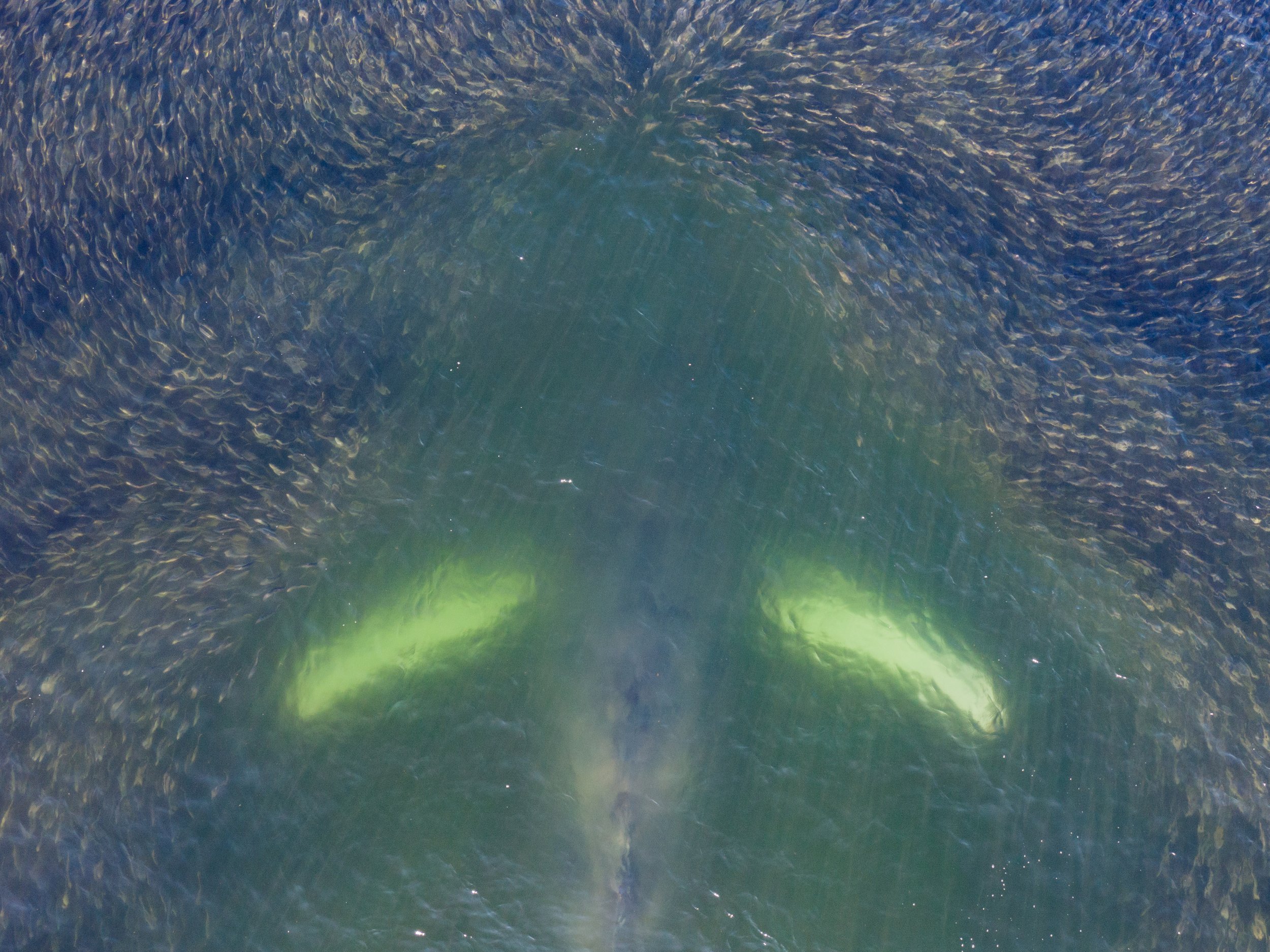
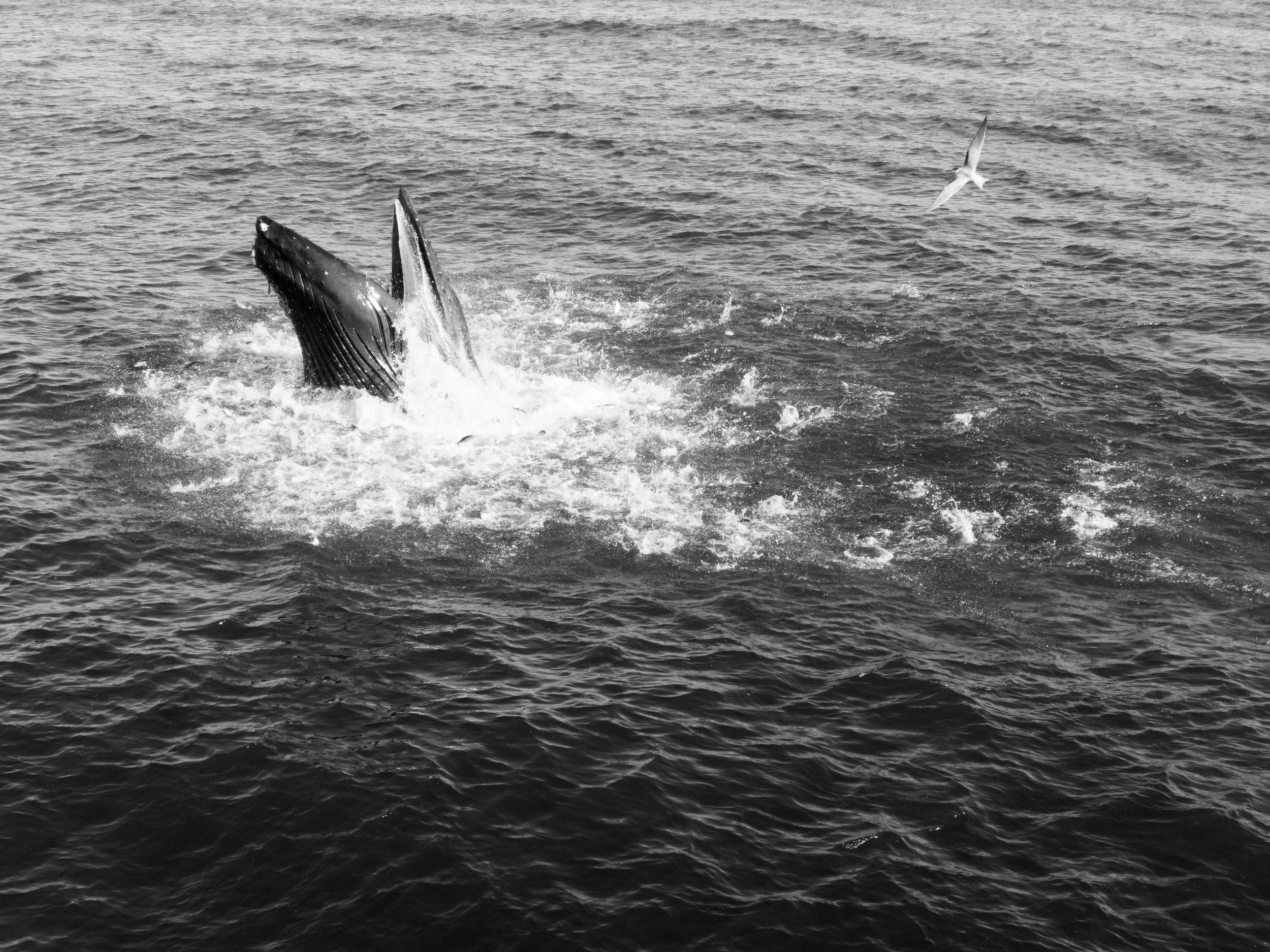
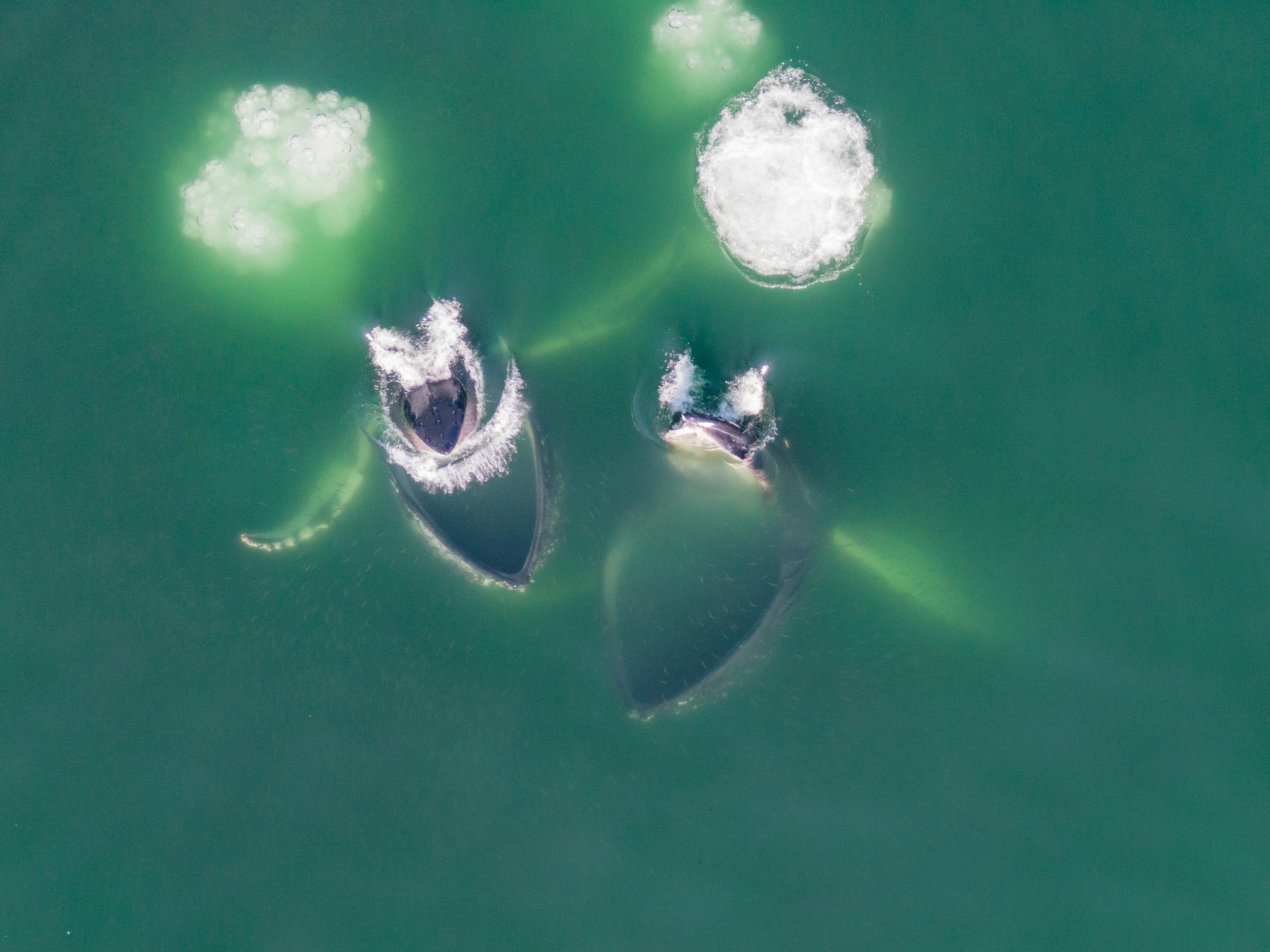
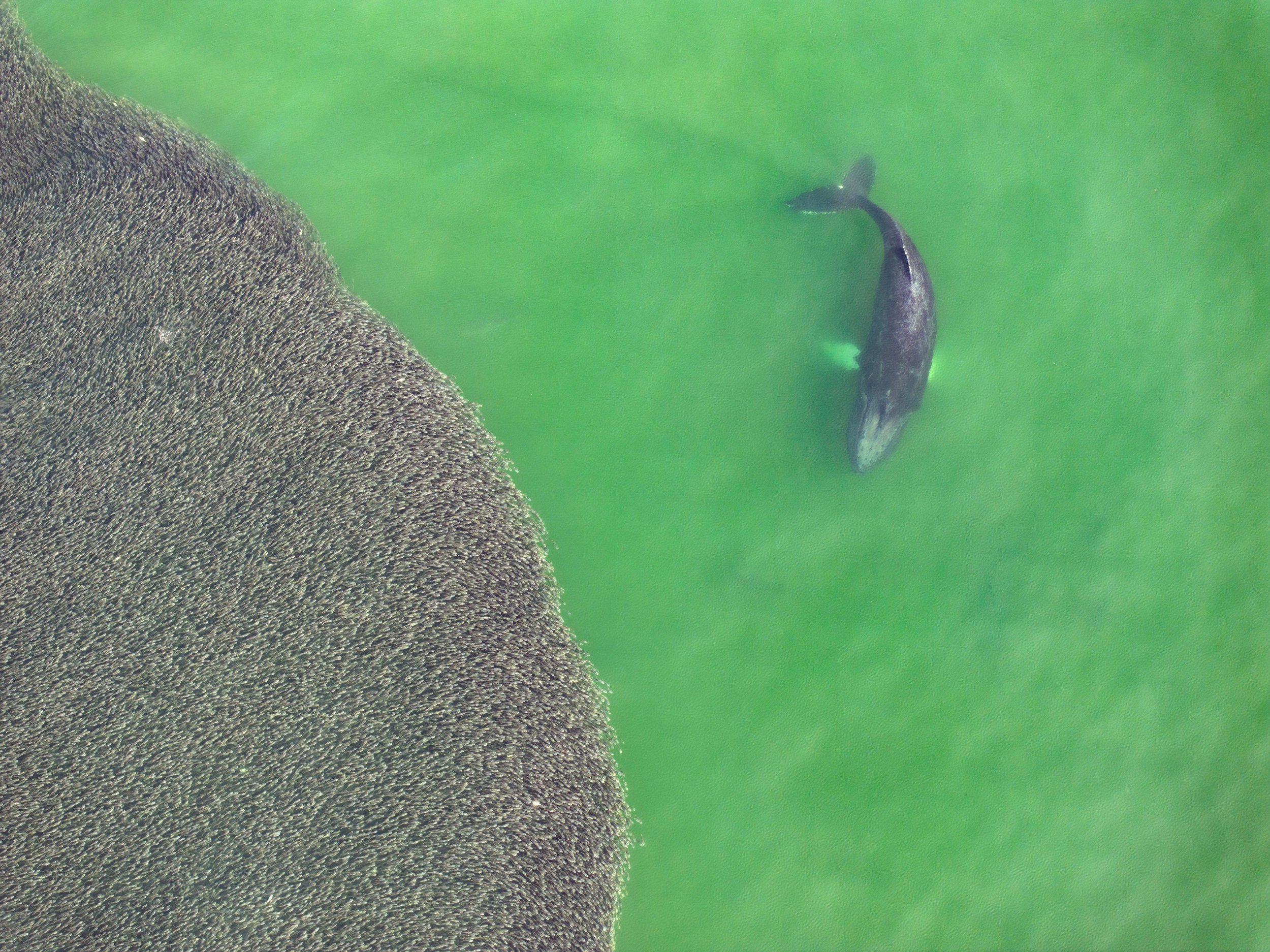
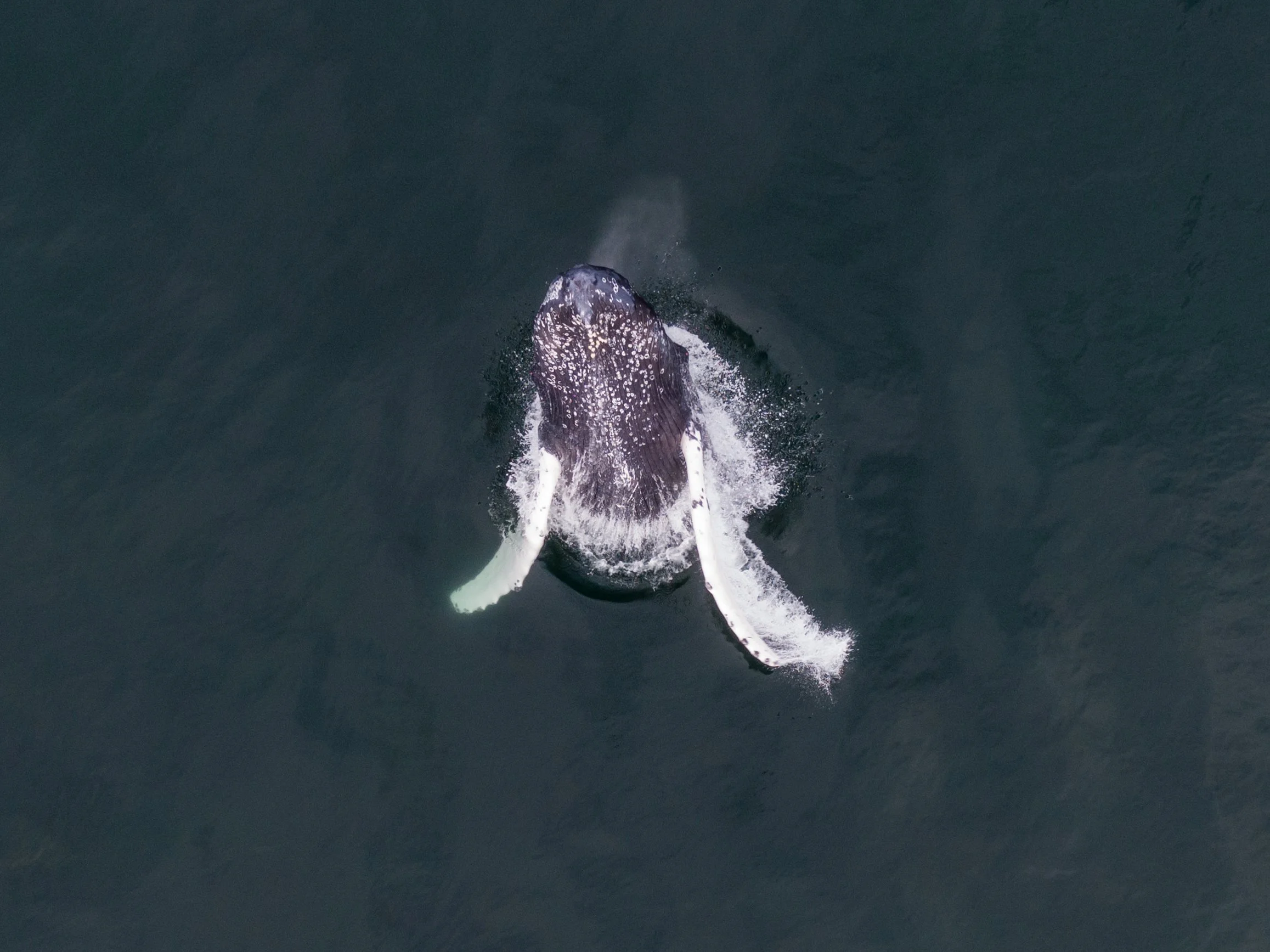
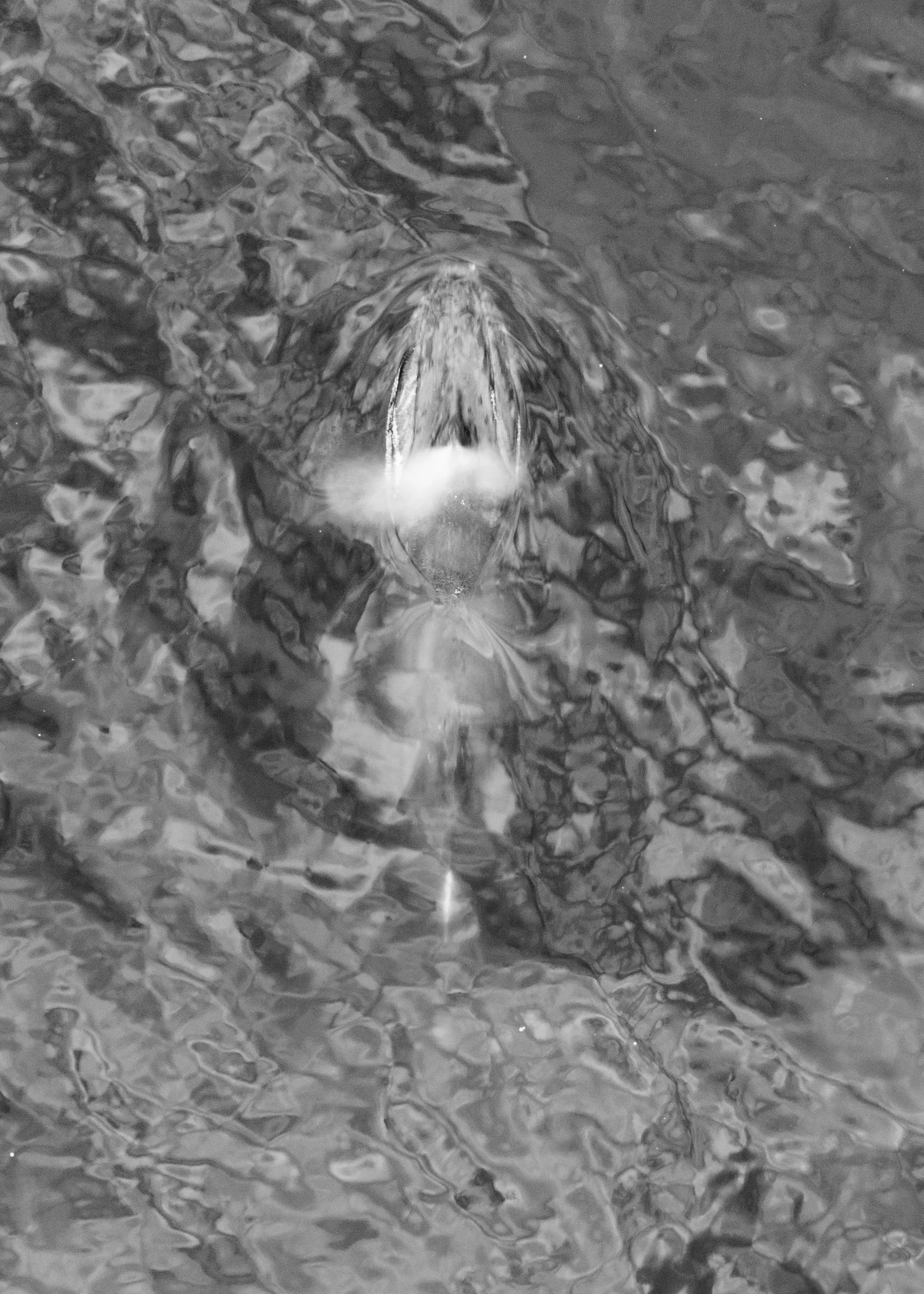
Humpback whales (Megaptera novaeangliae) are baleen whales known for their long migrations and specialized feeding strategies, the most dramatic of which is lunge feeding. Along parts of the U.S. East Coast — especially New York, New Jersey, and New England — humpbacks frequently lunge-feed remarkably close to shore. These whales accelerate toward dense schools of baitfish such as menhaden or sand eels and engulf huge volumes of water and prey in a single, powerful motion. Their presence in shallow, nearshore waters is driven by shifts in forage fish abundance, which now often congregate along beaches, in bays, and just beyond the surf zone.
This coastal feeding behavior has made humpbacks far more visible to shoreline observers and researchers in recent years. It also highlights their dependence on healthy, stable forage fish populations, which directly influence where and how often humpbacks feed. Because lunge feeding requires enormous energy and precise timing, whales tend to appear only when prey is densely concentrated. Their increasing tendency to feed close to shore serves as a strong indicator of changing marine dynamics — from prey distribution to water temperature — and reflects both the ecological richness and vulnerability of coastal ecosystems.
Nature Conservancy - Resurgence
NOAA - Biology
CRESLI - Long Island Based Research
Gotham Whale - Research and Advocacy
Whales of New York - Wildlife Conservation Society, Research, Education, and Conservation
Ocean Conservancy - Policy, Conservation, Education
Whale Song Mystery Solved by Scientists - BBC
Secrets of the Whales - National Geographic
Whales From Above - NYT, Sutton Lynch
Humpback Location Data - Duke