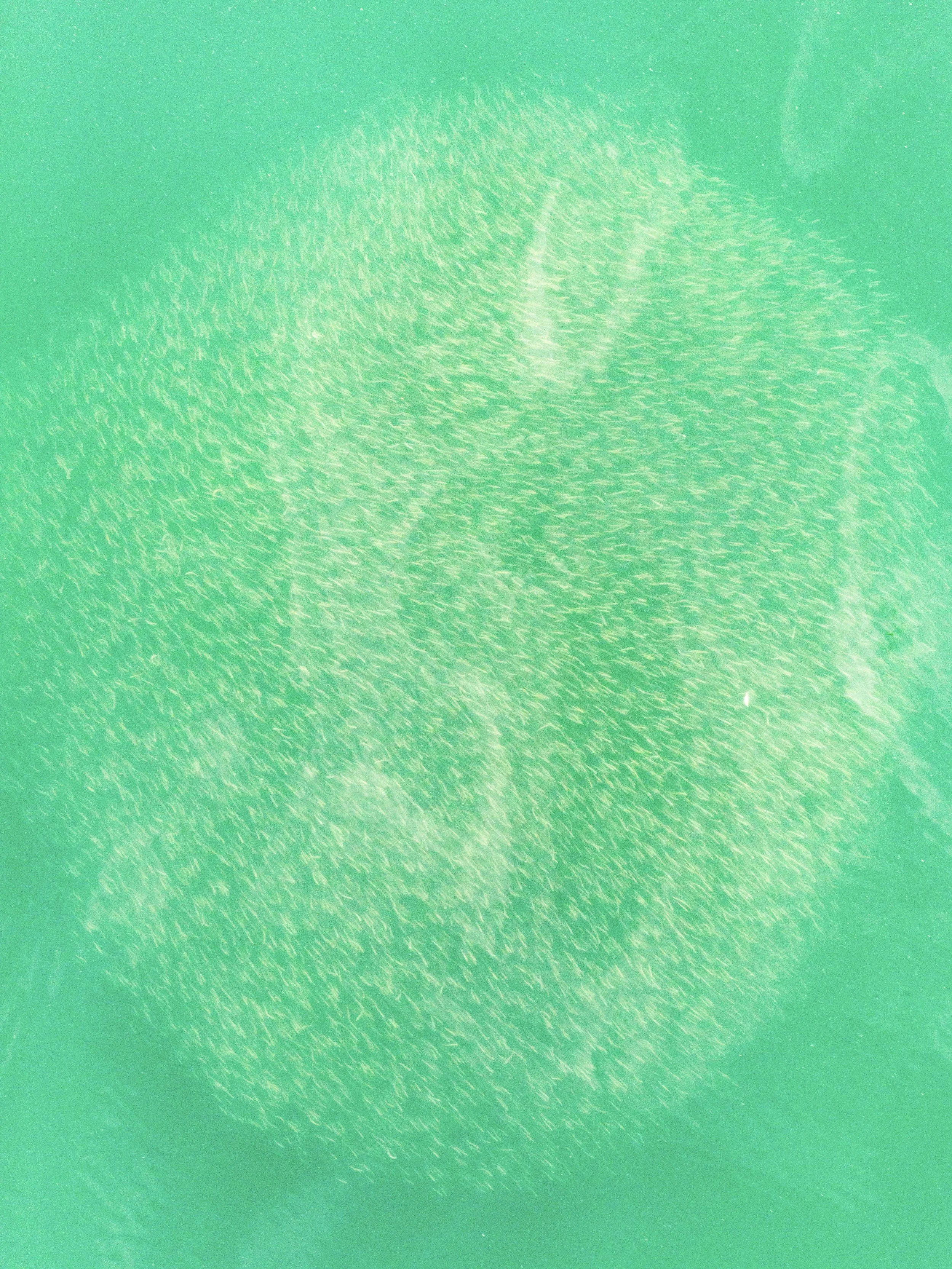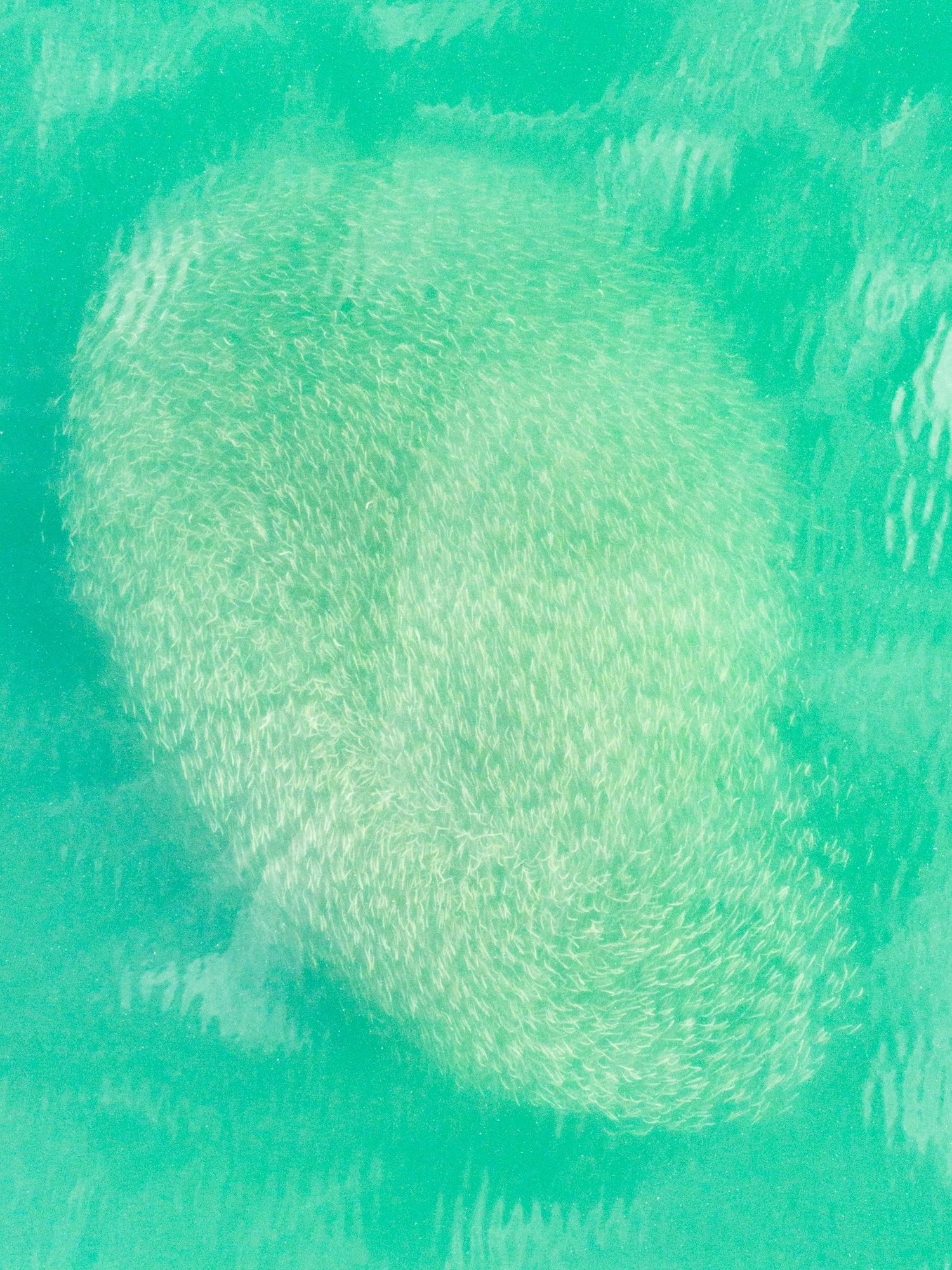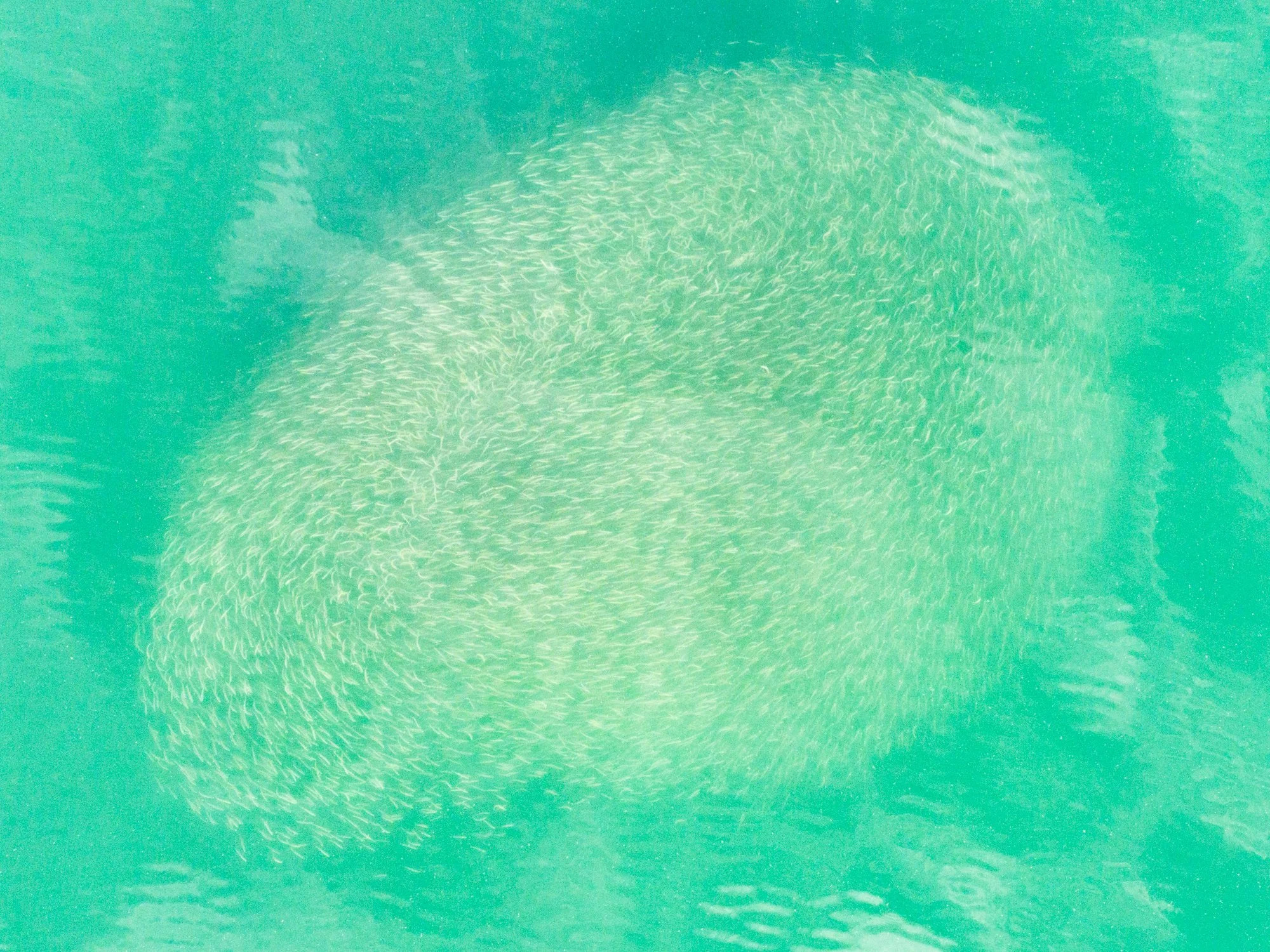
Sand Eels (aka Sand Lance)
Sand eels, also known as sand lance (Ammodytes spp.), are small, slender forage fish found throughout the North Atlantic and coastal waters of the Northeast United States. They are recognized for their elongated bodies, pointed snouts, and distinctive behavior of burrowing into sandy substrates to avoid predators and rest. Sand eels feed primarily on plankton and are highly sensitive to changes in water temperature and prey availability, which can cause their populations to fluctuate significantly from year to year.
Ecologically, sand eels are a critical mid-trophic species, transferring energy from plankton to a wide range of predators. They are a major food source for humpback whales, bluefin tuna, striped bass, cod, seabirds like puffins, and countless other marine animals. Because so many species rely on them, shifts in sand eel abundance can have immediate, visible effects on coastal ecosystems. Their importance has made them a focus of ongoing monitoring and conservation efforts, particularly as climate change alters ocean temperatures and plankton communities across the North Atlantic.
USGS - Sand Lance in the Northwest Atlantic Ecosystem. Paper by Michelle Staudinger
BOEM - Short video
Sensitivity to sand lance to shifting prey and hydrography indicates forthcoming change to the northeast US shelf forage fish complex - Justin J Suca, David N Wiley et al.